
Clark County Court Records Access
Clark County Court Records are kept by the county clerk, and the quickest first check is usually WCCA. That combination gives you a public look at the case and the local office that holds the official file. If you need to confirm a filing, find a docket note, or request a copy, the county clerk is the right place to start. Clark County handles the same core circuit court record types as the rest of Wisconsin, so the process is familiar once you know which office owns the file. Search first, then move to the courthouse when the record has to be pulled or certified.
Clark County Court Records Snapshot
Clark County Court Records at the Clerk
The Clark County Clerk of Circuit Court keeps all county circuit court records. The office handles civil, criminal, family, probate, juvenile, small claims, and traffic cases. That broad coverage means the clerk can help whether you are chasing an old case, a recent filing, or a certified judgment. If you have only a name and a rough date, the office can still guide the search. If you have a case number, the process gets faster. The clerk is the office that owns the local record set, so it should be your first stop when you need a document, not just a summary.
The office is at the Clark County Courthouse, 517 Court Street, Neillsville, WI 54456. The phone number is (715) 743-5148, and the office hours are Monday through Friday from 8:00 AM to 4:30 PM. The county website at co.clark.wi.us gives the broader county context, while the clerk page at Clark County Clerk of Circuit Court is the direct source for records help and office details.
That clerk page is the cleanest local source when you want to confirm where to go or what to ask for. It is the office that can tell you whether a file is on site and whether a copy request needs a particular format. That practical step matters, especially for older cases or records that need certification for another office.
The county portal image below comes from co.clark.wi.us. It is the official county-side marker for Clark County Court Records.
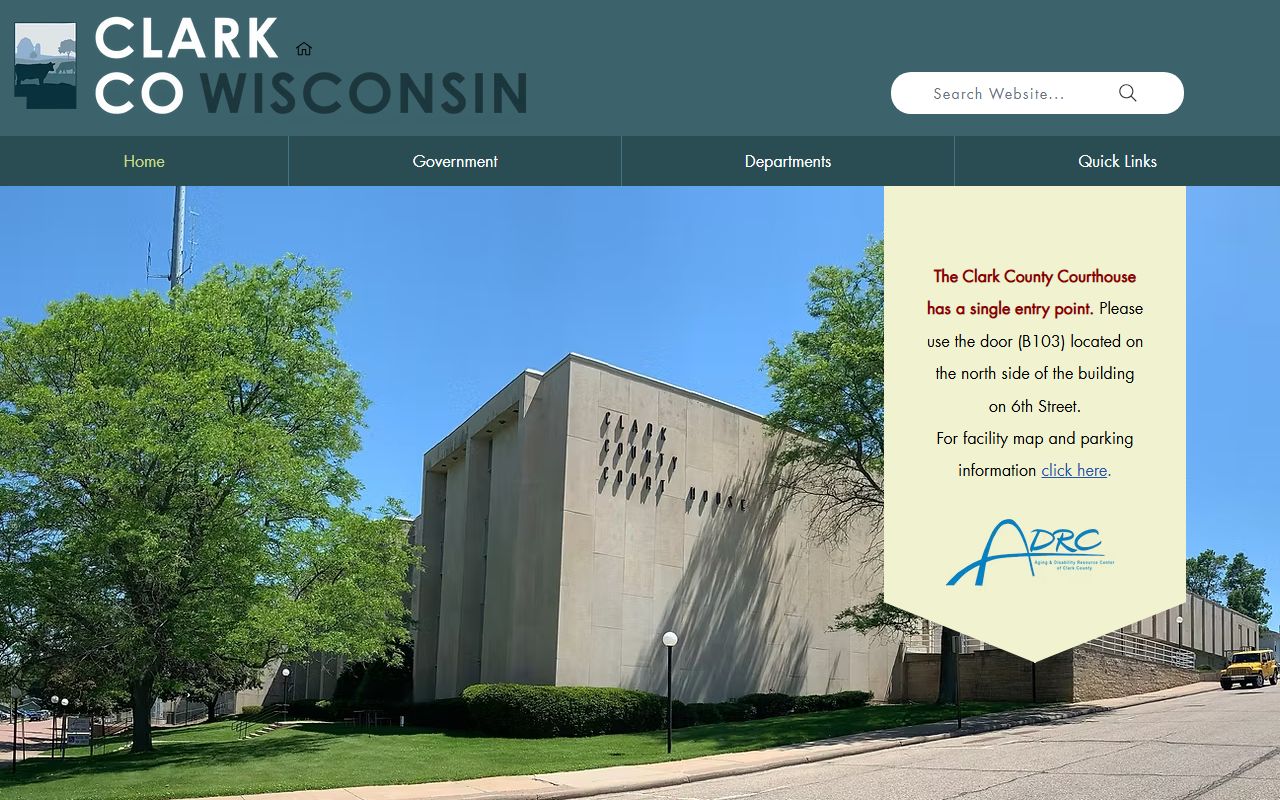
Use that portal as a local checkpoint before you call or visit the clerk. It points you back to the office that actually controls the file.
Search Clark County Court Records Online
Wisconsin Circuit Court Access is the best online tool for Clark County Court Records. It is public, free, and searchable by party name, business name, case number, or attorney name. You can also limit the search to Clark County, which is useful when you already know the filing county but still need the exact record details. The portal gives you a summary view of the case and helps you decide whether you need a clerk lookup next.
The WCCA summary is useful, but it is not the same as the full case file. It shows what court staff entered into the statewide system, including the case type, parties, and public docket activity. If you need the judgment, a signed order, or a document that is not displayed in the public summary, the county clerk remains the source of record. That is why the online search should be treated as the first step, not the final answer.
Keep the basics ready:
- Party name or partial name
- Case number, if known
- Business name for company cases
- Approximate filing year
- County filter set to Clark
That approach helps trim down false hits and makes older searches easier. If a case moves into appeal, the next public search is WSCCA, which covers the Wisconsin Supreme Court and Court of Appeals. That is a separate record layer, so it should be treated as a different search from the county file.
Note: WCCA gives you the public case summary, but the county clerk still controls the certified file and the direct copy request.
Clark County Court Records Copies and Fees
Wisconsin fee law sets the baseline for copy costs. Under Chapter 814, standard copies are generally $1.25 per page and certified copies are $5 per document. That gives Clark County users a practical starting point before they ask the clerk for a file. If the copy is meant for another agency or court, the certified version is usually the right one. If you only need to review the file, a plain copy may be enough.
The county clerk office can confirm the local request path. That matters because the office may need time to pull an older file or check whether a document is on site. Clark County handles records in a straightforward way: use WCCA for the first check, then ask the clerk for the paper file or certified copy when you know what you need. That sequence avoids guessing and keeps the request focused on the right case.
The state tools fill in the rest. The Wisconsin Court System forms repository holds the official forms, and Wisconsin eFiling handles registered electronic filing for many circuit court matters. If you need a broader explanation of the court structure, the Wisconsin Court System and the clerk directory are the right official references.
Clark County uses the same statewide record framework as every other county. The clerk keeps the file. WCCA shows the public summary. The state forms and eFiling tools handle filings and related requests. Once those roles are clear, the record search becomes much easier to manage.
Public Access to Clark County Court Records
Wisconsin public records law starts from a presumption of openness. Chapter 19 is the rule that shapes access to Clark County Court Records and most other government records in the state. That means many case details are public, but not every file page is open without limit. Some material can be sealed, restricted, or redacted when privacy or another law requires it. The law keeps the system open while still allowing those limits.
The Wisconsin State Law Library at wilawlibrary.gov is useful when you want to understand how WCCA works and what it does not show. That library guide helps you tell the difference between a docket note, a case summary, and the actual file at the clerk office. The Wisconsin Public Records Law Fact Sheet is also a plain-language guide for access rules and common limits.
Clark County follows the same basic pattern as the rest of Wisconsin. The clerk keeps the local file. The public portal gives you the search view. The state tools help when the request needs forms, filing, or a broader explanation of court procedure. If you keep those functions separate, the search stays efficient and the office you contact is the right one for the task.
For many users, that is the whole job. Start with the county clerk, verify the case online, and use the state tools only when the request moves beyond a basic search or copy request.