
Search Wisconsin Court Records
Wisconsin Court Records are spread across county circuit courts, statewide search tools, appellate systems, and a smaller set of federal courts, so the fastest search starts by matching the case to the right level. Most people begin with the statewide WCCA portal, then move to the county Clerk of Circuit Court for the official local file. That approach works well because WCCA gives a public summary, while the county clerk controls the record itself. If you need a case lookup, docket history, local copy request, or county contact path, this site is built to move you from statewide tools into the right Wisconsin office without guesswork.
Wisconsin Court Records Snapshot
How Wisconsin Court Records Are Organized
Wisconsin Court System is the main statewide hub for court services, and it is where most Wisconsin Court Records questions should begin. The state system ties together public case search, filing tools, forms, clerk contact directories, appellate access, opinions, and self-help resources. That broad structure matters because the record you need may sit in a county circuit file, an appellate docket, or a separate federal system depending on where the case was filed. Starting with the official court system avoids a lot of wasted clicks.
The Wisconsin Court System homepage image below comes from wicourts.gov. It is the statewide entry point for Wisconsin Court Records, forms, opinions, and clerk resources.
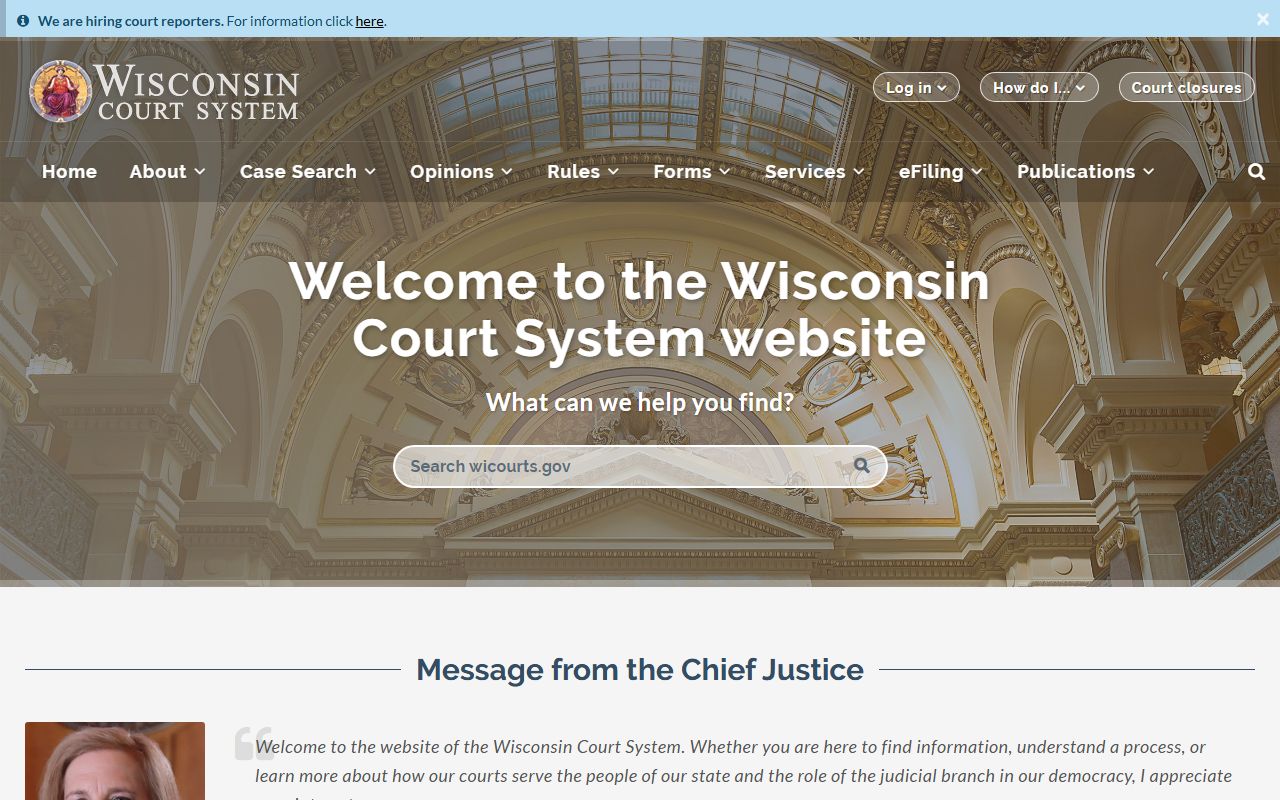
That homepage is the broadest official place to start when you are not yet sure whether your record request belongs in a county court, an appellate court, or another Wisconsin court service.
Most record searches still resolve at the county level. Each county Clerk of Circuit Court maintains the official circuit court records for that county. The statewide clerk directory at wicourts.gov/contact/docs/clerks.pdf is useful when you know the county but still need the right local office. Once you match the case to the county, the county clerk becomes the office that handles the actual file, the local contact details, and the courthouse record path.
Search Wisconsin Court Records Online
Wisconsin Circuit Court Access, usually called WCCA or CCAP, is the main public search tool for Wisconsin Court Records in county circuit courts. It lets you search by party name, business name, attorney name, or case number, and it covers civil, criminal, family, probate, juvenile, small claims, liens, tax warrants, and traffic matters. For most people, WCCA is the first real search step because it confirms whether a case exists and shows the public docket summary before you contact a local clerk office.
The WCCA image below comes from wcca.wicourts.gov. It is the main statewide public gateway for Wisconsin Court Records in the county circuit system.
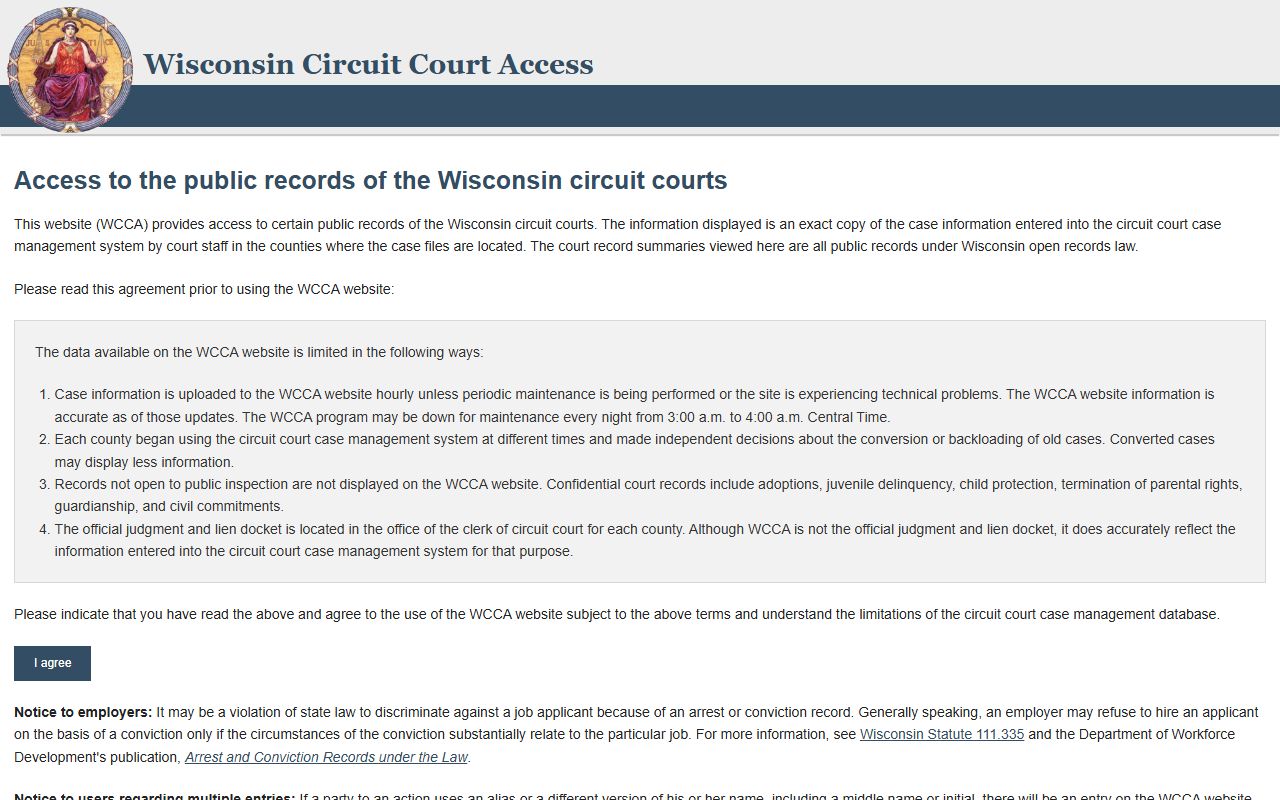
Use that portal to confirm the case, the county, and the docket trail before asking a local clerk for the actual file or a county copy request.
WCCA is still a public summary system, not a full archive of every document filed in every case. It can show parties, filing dates, docket entries, and case status, but it does not replace the local record held by the county clerk. That is one of the most important points in any Wisconsin Court Records search. WCCA helps you find the right file. The county clerk is still the source of record for the local case itself.
Keep these details ready before you search:
- Full or partial party name
- Case number if you already have it
- Approximate filing year
- County or city tied to the case
- Case type if you know it
That short list reduces false hits and makes the county follow-up much easier once the search moves from the screen to the courthouse counter.
Wisconsin Court Records in Appeals and Federal Courts
Not every Wisconsin Court Records search stops at the circuit court level. If a case moves into the Wisconsin Supreme Court or Court of Appeals, the official public search portal changes to WSCCA. That system handles appellate case status, docket information, and related appellate search functions. It is separate from WCCA because it serves a different level of the state court system.
The appellate image below comes from wscca.wicourts.gov. It represents the official public access path for Wisconsin appellate Court Records.
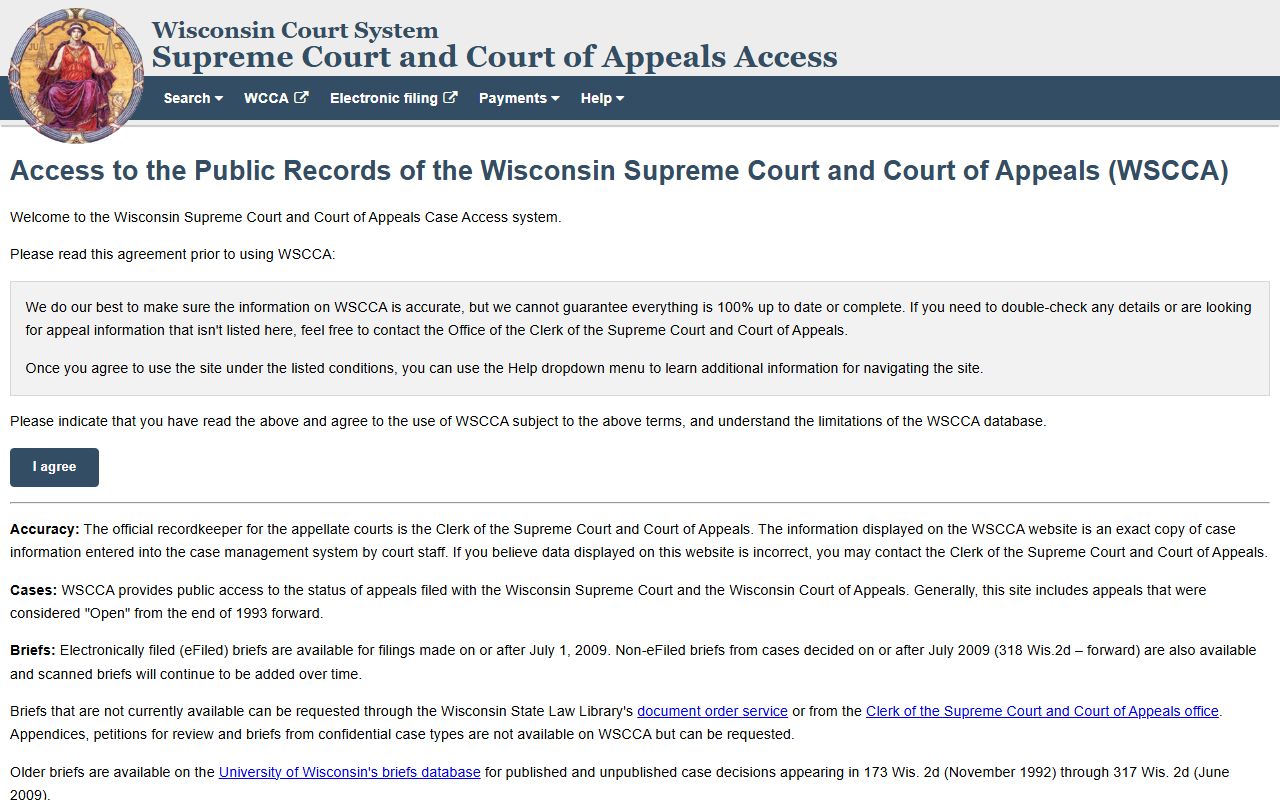
That portal matters when a circuit case becomes an appeal, or when the record you need belongs to the appellate courts rather than the county clerk.
Some Wisconsin Court Records also sit outside the state system because they belong to federal court. The United States District Court for the Eastern District of Wisconsin serves the eastern side of the state, while the Western District serves the western side. Federal case records are searched through PACER rather than WCCA or WSCCA. That split matters because a federal civil or criminal case will never appear in the same place as a Wisconsin circuit case.
The Eastern District image below comes from wied.uscourts.gov. It is the official federal court source for eastern Wisconsin filings.
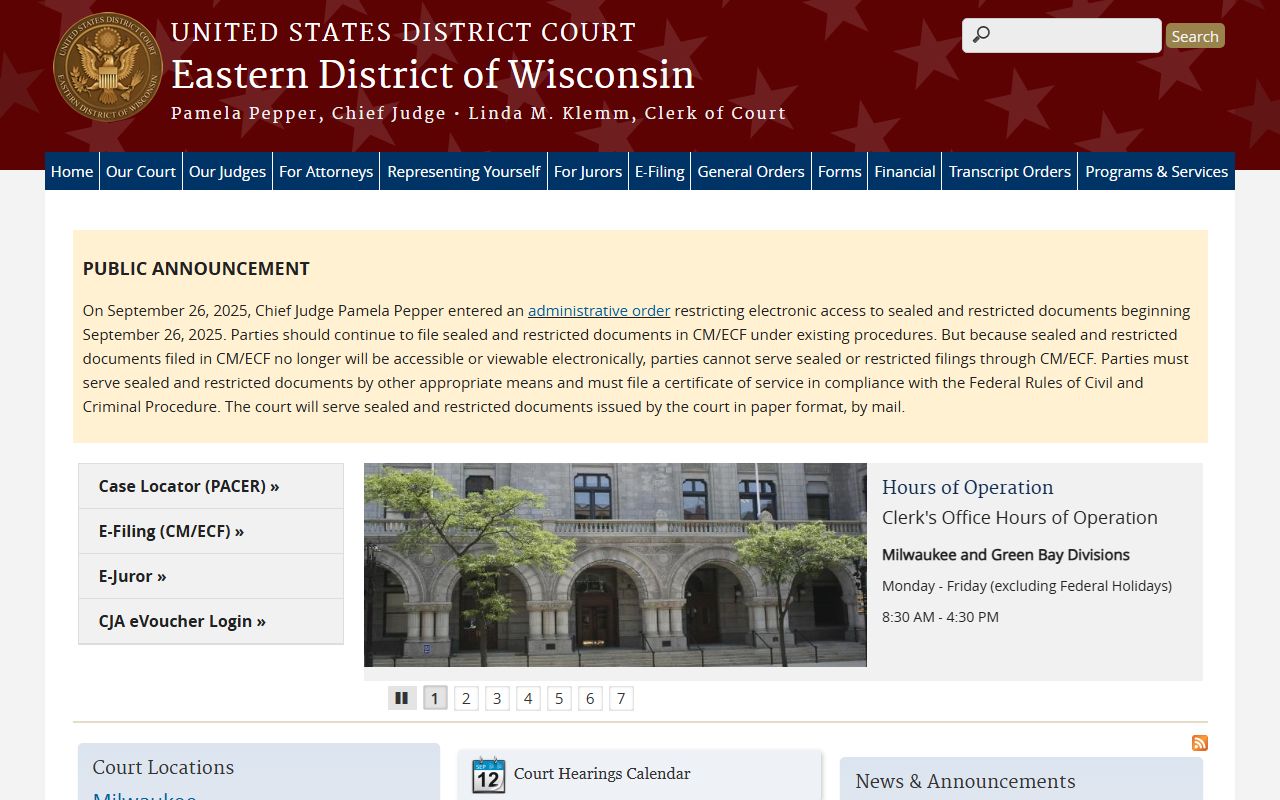
Use the Eastern District site when the record belongs to a federal case filed in the eastern portion of Wisconsin.
The Western District image below comes from wiwd.uscourts.gov. It is the official federal court source for western Wisconsin filings.
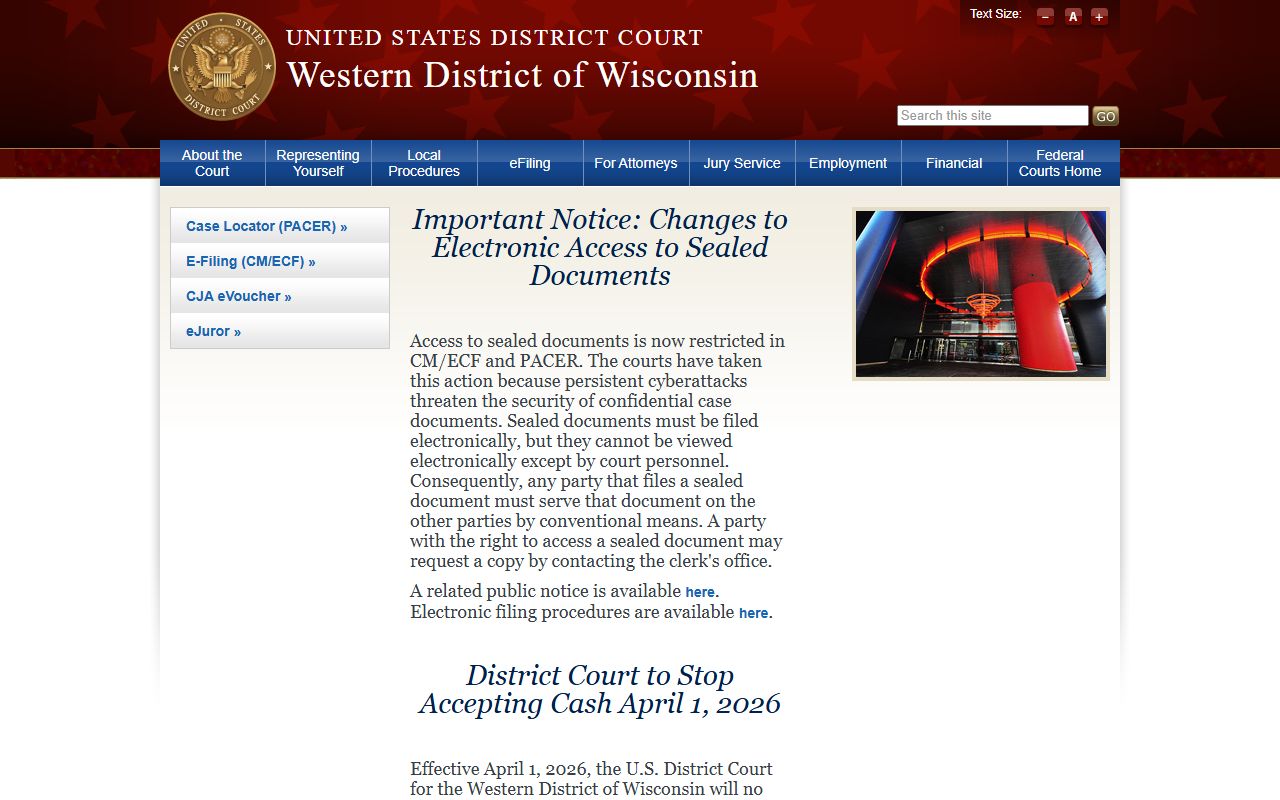
That federal split keeps Wisconsin Court Records organized by court level, which is why identifying state versus federal jurisdiction early can save a lot of time.
Wisconsin Court Records Forms, Filing, and Costs
Many Wisconsin Court Records questions eventually turn into filing questions. When that happens, the official statewide tool is Wisconsin eFiling. Registered users can file into existing cases, start new cases, view case information, and manage filing tasks through the same statewide system used by the courts. That matters because records access and filing often overlap in active cases. A person who begins by searching a case may end up filing a notice, response, motion, or fee waiver request soon after.
The eFiling image below comes from efiling.wicourts.gov. It is the official filing system tied to Wisconsin Court Records in circuit court matters.
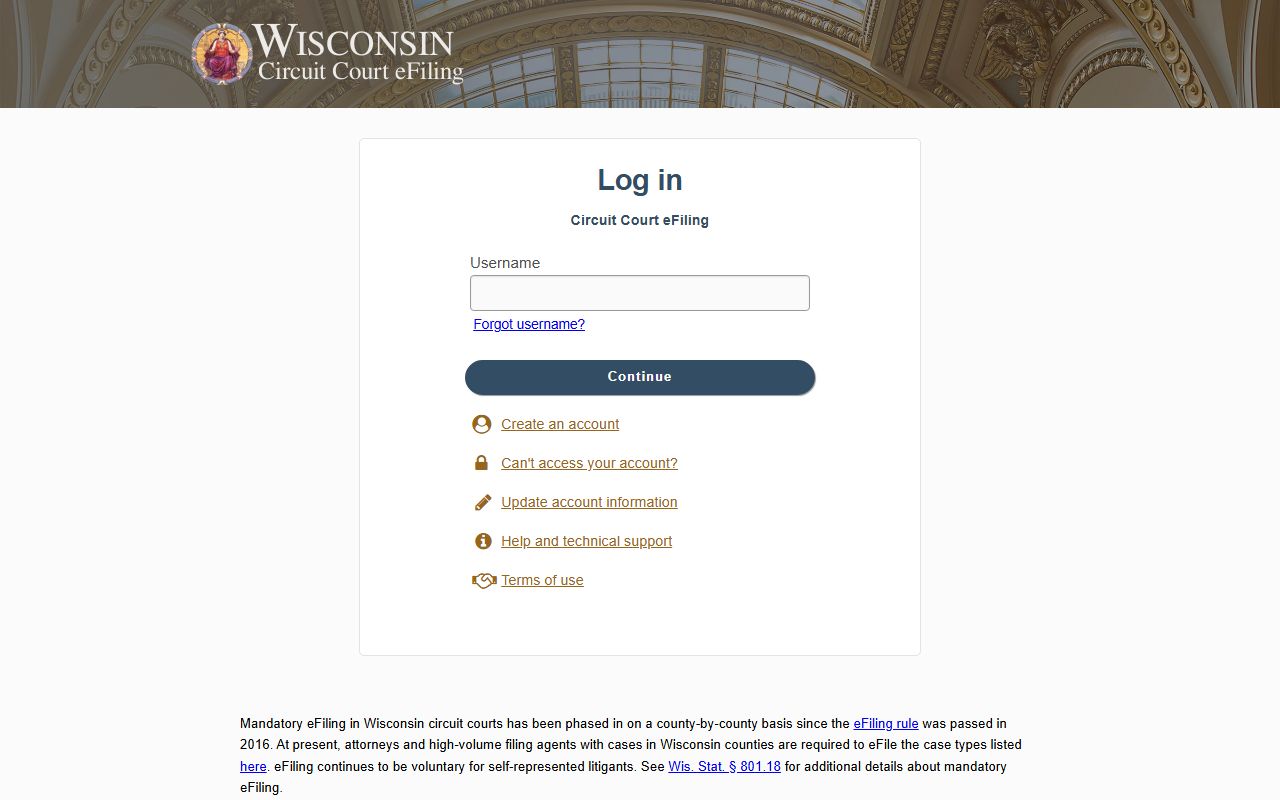
That system is the right next step when the record search turns into a court filing rather than a simple request for information.
The official forms repository at wicourts.gov/forms1/formindex.htm is just as important because it holds the forms used across Wisconsin circuit court matters. The statewide fee structure also matters. Chapter 814 is the general statewide source for copy, certification, and other court fee baselines, and it gives a better first answer than guessing from an unofficial site.
The court costs image below comes from law.justia.com/codes/wisconsin/chapter-814/. It reflects the statewide fee framework used in many Wisconsin Court Records requests.
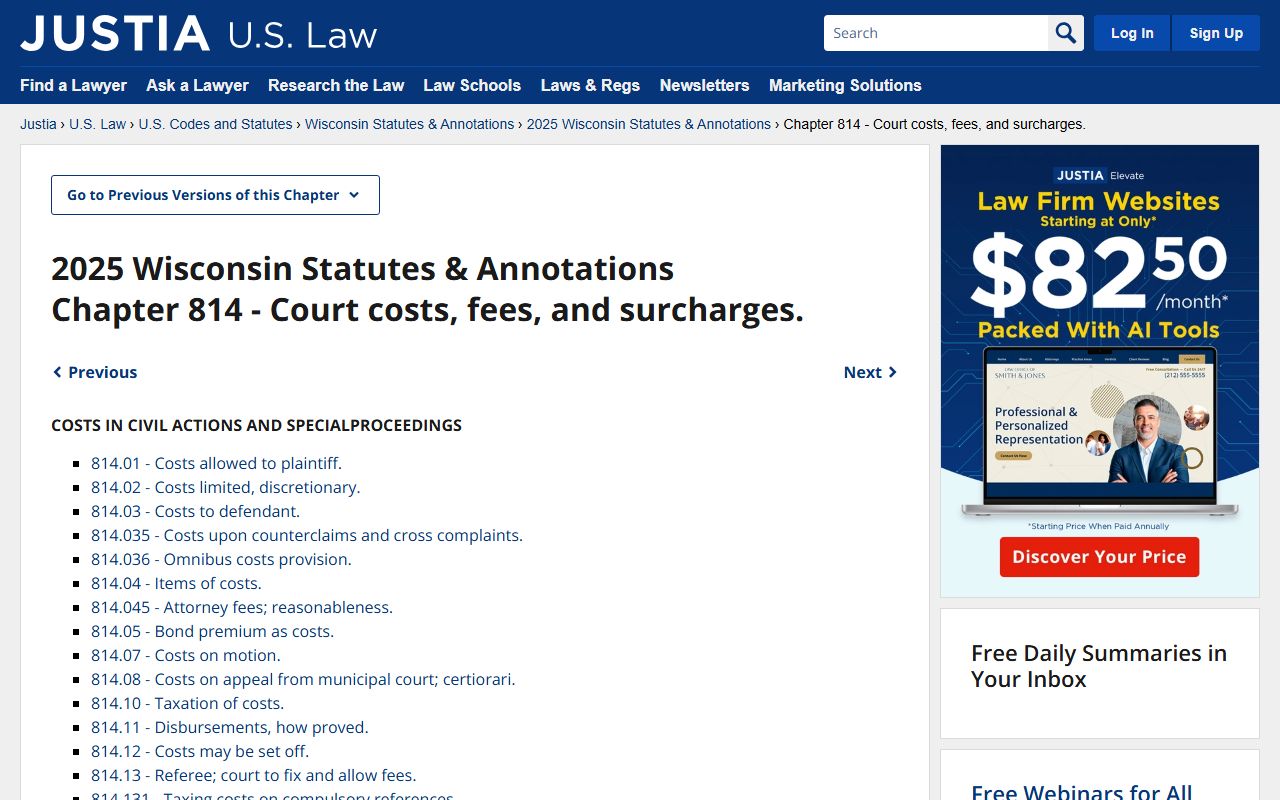
That statewide fee framework is useful before you contact a county clerk, especially when you need to understand the difference between inspection, plain copies, and certified records.
Public Access to Wisconsin Court Records
Public access to Wisconsin Court Records starts with Chapter 19, Wisconsin's public records law. That law begins from the idea that the public is entitled to broad information about government affairs and official acts. Court records still have limits, though. Some information may be redacted. Some filings may be sealed. Juvenile matters and protected personal data can be restricted. That means public access is broad, but it is not unlimited, and the county clerk or court office still has to apply the correct release rules.
The public records law image below comes from law.justia.com/codes/wisconsin/chapter-19/. It represents the legal framework behind public access to Wisconsin Court Records.
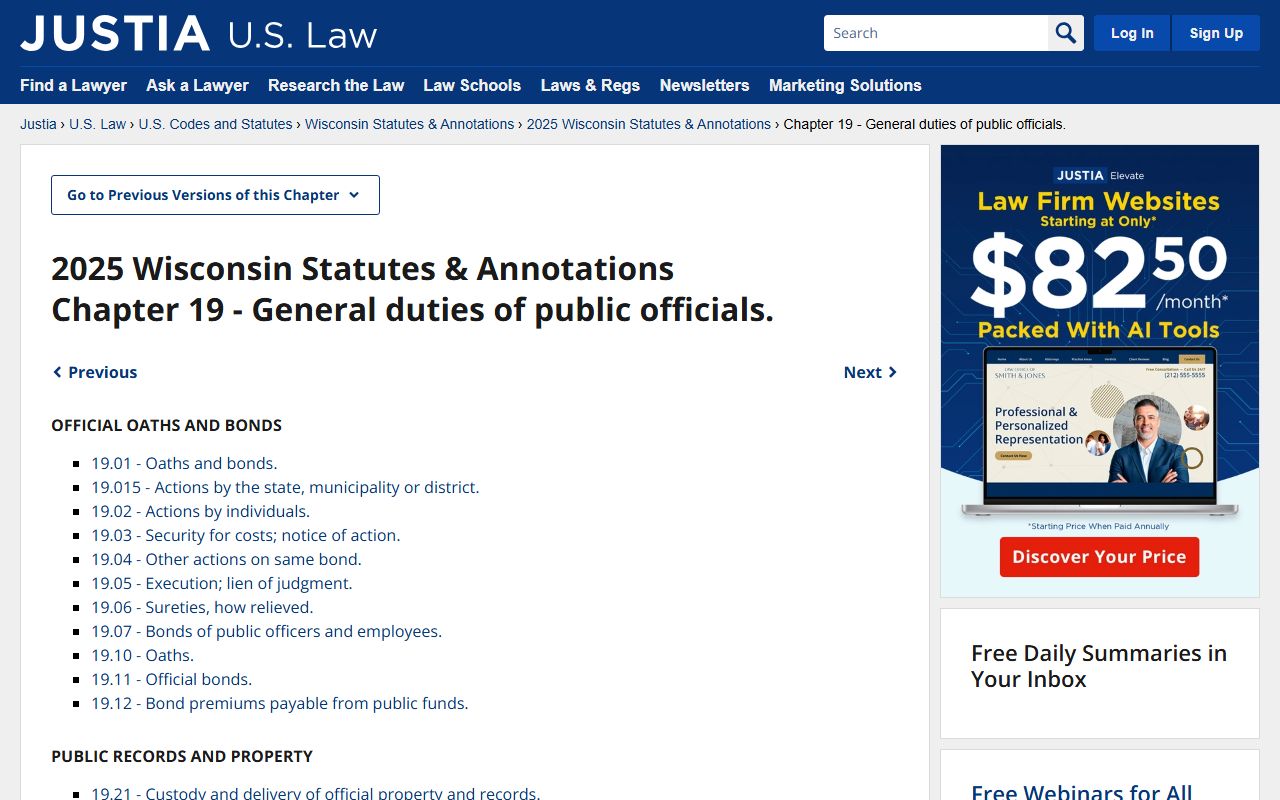
That law explains why WCCA exists, why many court files are open, and why some parts of a record can still be withheld or redacted.
The Wisconsin State Law Library is one of the most practical statewide resources because it explains what can actually be found in the court record systems and how to read those public results. It is especially useful when a person sees a docket and assumes it is the same as a full document set. It is not. The library helps close that gap.
The law library image below comes from wilawlibrary.gov. It is a strong statewide guide for interpreting Wisconsin Court Records and understanding the limits of public case portals.
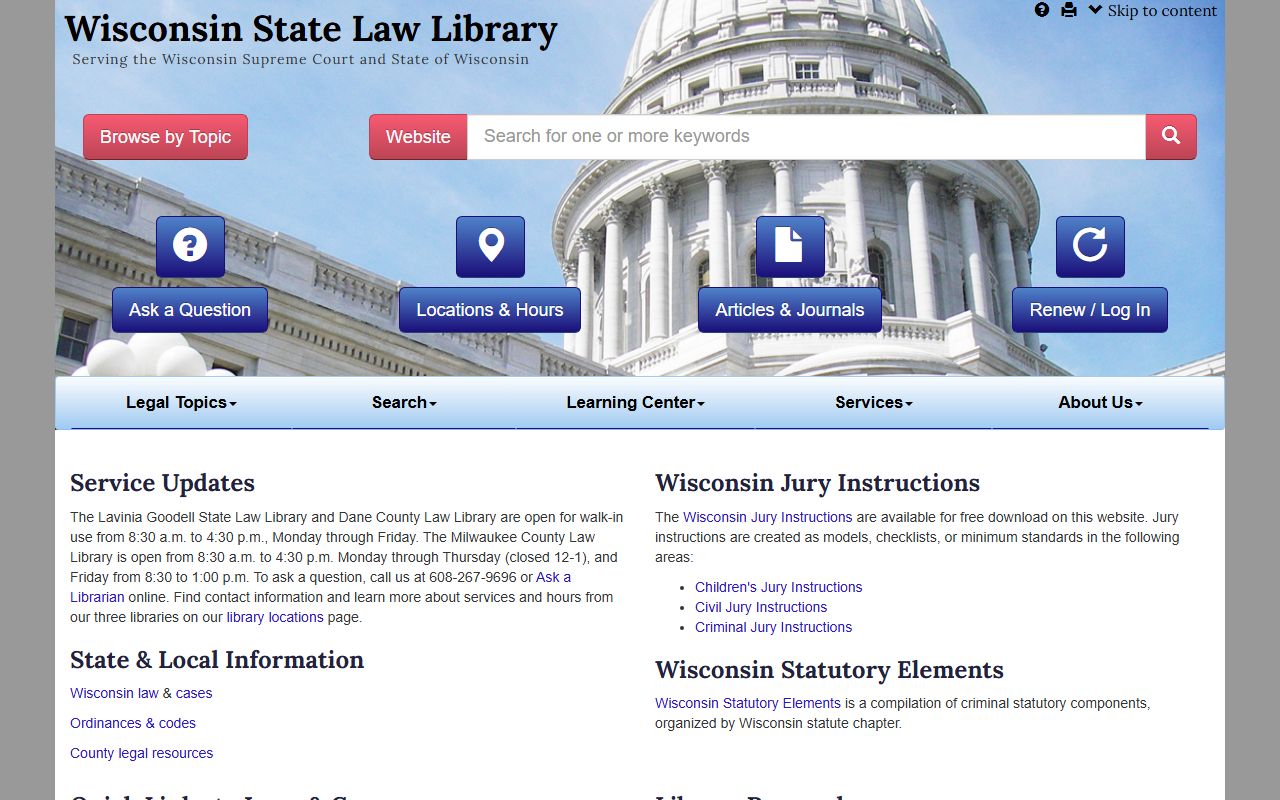
That law library is one of the best places to learn how court summaries, filings, and county record access fit together.
Criminal-history questions sometimes lead people outside the county court search path and into the Wisconsin Department of Justice. The DOJ Crime Information Bureau maintains statewide criminal-history services through WORCS. That is not the same thing as a circuit court docket search, but it can be relevant when someone needs a statewide criminal history record rather than a county case summary. Knowing that distinction keeps Wisconsin Court Records searches cleaner and more accurate.
The DOJ image below comes from doj.state.wi.us/dles/cib. It represents the statewide criminal-history resource that sits next to, rather than inside, the county court search system.
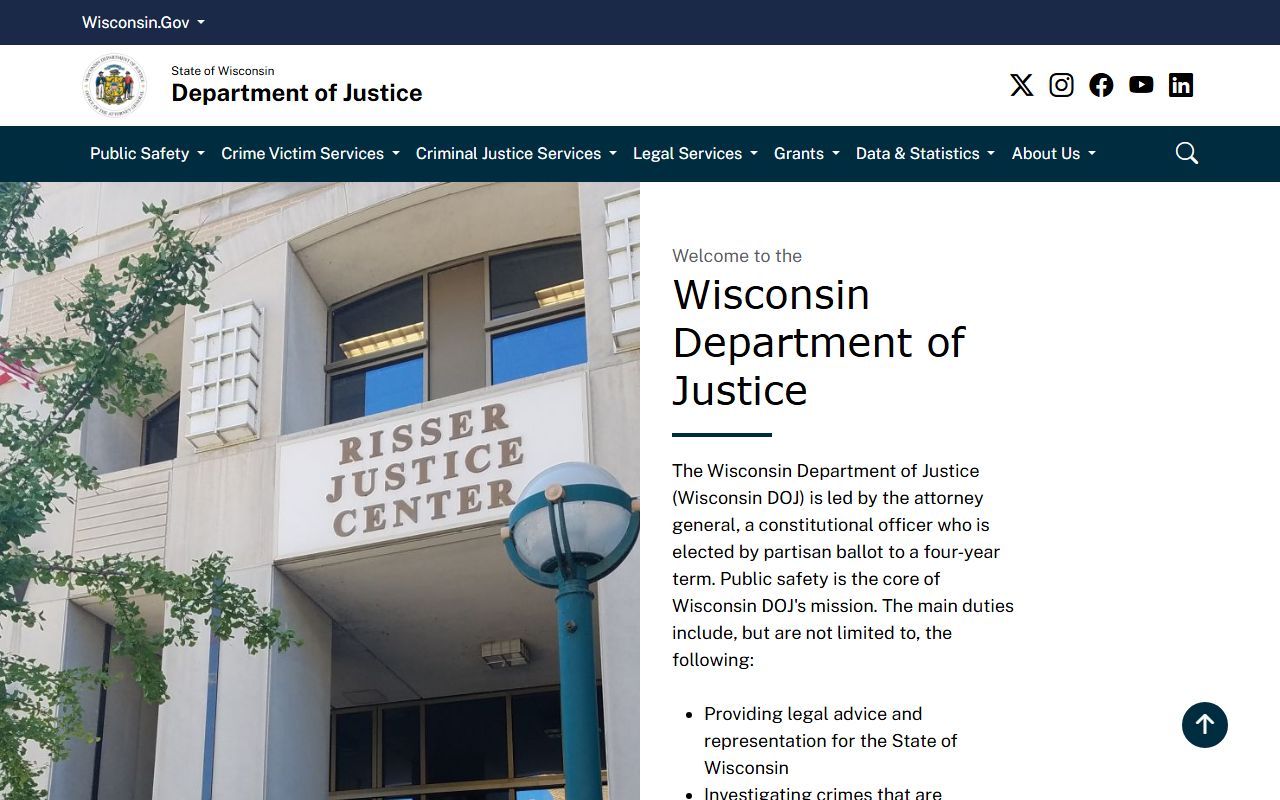
Use DOJ criminal-history tools when the request is about statewide criminal-history data rather than a local circuit court file.
The final state image below comes from wisconsincourtdata.com. It reflects a private specialized data vendor built around CCAP data access. It is not the first stop for public Wisconsin Court Records searches, but it helps illustrate that some users need specialized paid data services after the public court portals and official county tools are no longer enough.
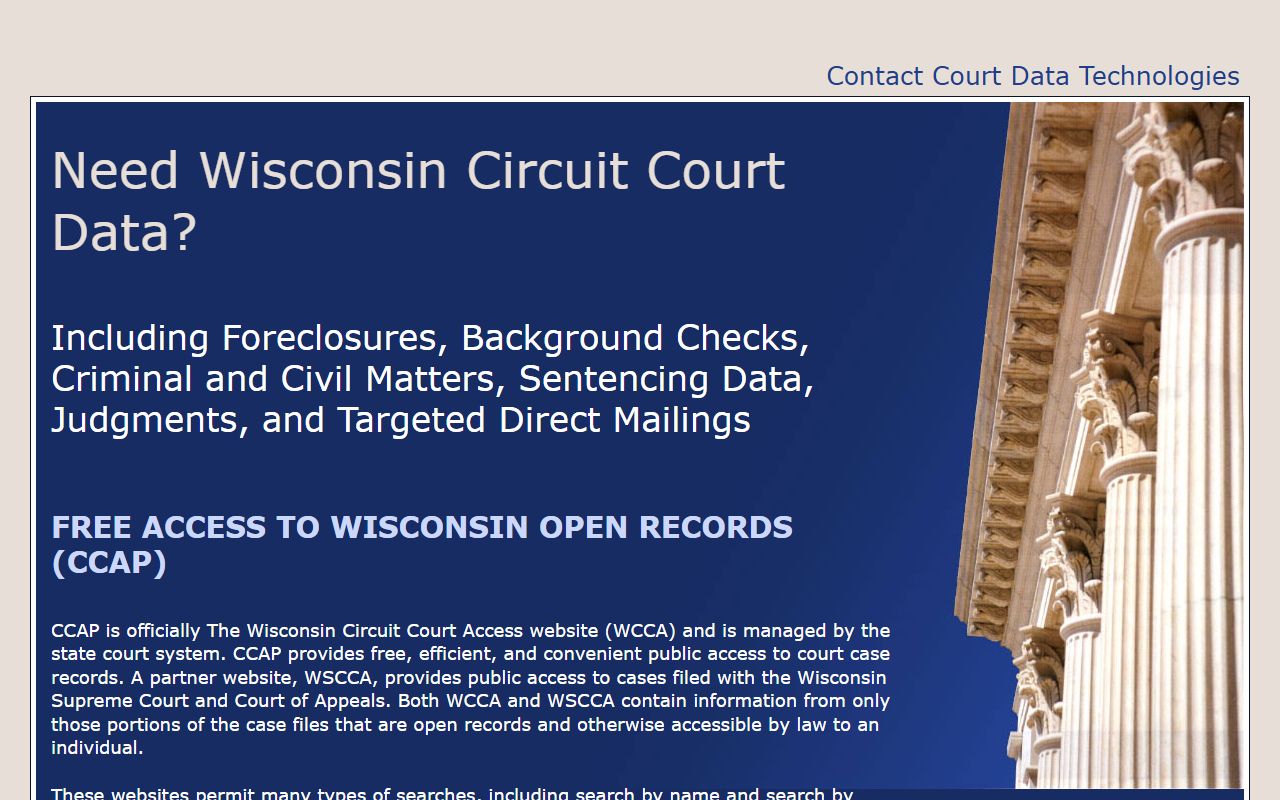
For most public users, the official court system, county clerks, WCCA, WSCCA, and the state law library remain the better starting points.
Browse Wisconsin Court Records by County and City
The statewide search tools work best when you can quickly move from the portal to the right local page. Use the county and city guides below to connect your Wisconsin Court Records search with the actual county clerk office, courthouse location, and local procedures that apply to that place.
Wisconsin Court Records in Major Cities
City searches often start with a city name even when the official file is held by the county clerk. These city guides connect municipal context, county court access, and the public search path for the places most users search first.